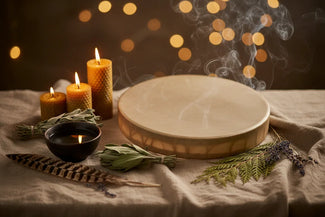
Palo Santo, often known as the sacred “Holy Wood” of South America, is treasured for its distinctive citrus-woody aroma and its long association with ritual, meditation and traditional cleansing practice.
At Sacred Essence, explore a carefully selected collection of Palo Santo sticks, natural wood, incense sticks, incense cones, aromatic resins and essential oils for ceremony, altar work, meditation and mindful spaces.
Our range includes natural Palo Santo wood for traditional aromatic burning, Palo Santo incense in sticks and cones, and essential oils for suitable aromatic use. Each format offers a different way to experience the characteristic fragrance of Palo Santo, from the natural aroma of the wood itself to convenient incense and concentrated oil preparations.
Whether used for meditation, symbolic cleansing, grounding rituals or simply to create a warm aromatic atmosphere, Palo Santo remains one of the most recognisable sacred woods in contemporary spiritual practice.
Our natural Palo Santo wood is sourced through responsible, community-led supply relationships, while our wider Palo Santo collection brings together traditional material and modern aromatic formats for ritual and everyday use.
The Sacred Meaning, Aroma & Sourcing of Palo Santo
Palo Santo means “Holy Wood” in Spanish and commonly refers to Bursera graveolens, an aromatic tree native to parts of South America, particularly Peru and Ecuador.
Its wood is valued for a distinctive fragrance combining citrus, warm wood, soft resin and subtle pine-like notes. Within traditional and contemporary spiritual practice, Palo Santo has become associated with prayer, ceremony, meditation, symbolic cleansing and the preparation of sacred space.
These traditions are culturally specific and varied. Palo Santo should not be treated as a universal Indigenous practice or as a material with guaranteed spiritual or therapeutic effects.
Sacred Essence offers Palo Santo in several forms, allowing you to choose between the character of natural wood and the convenience of contemporary incense and aromatic preparations.
One of the defining qualities of Palo Santo is its fragrance.
Natural Palo Santo wood has a warm, sweet and resinous aroma with recognisable citrus and woody notes. Depending on the individual piece, you may also notice hints reminiscent of pine, mint, spice or soft balsamic resin.
Because wood is a natural material, fragrance strength can vary between pieces. Differences in resin concentration, age and individual wood grain can all affect how strongly a stick smells and burns.
Palo Santo incense sticks, cones and fragrance preparations may interpret this familiar scent differently according to their formulation, so they should not be assumed to smell identical to natural Palo Santo wood.
Palo Santo Wood & Sticks
Natural Palo Santo sticks offer the most direct way to experience the aroma of the wood itself.
A piece is usually lit briefly, allowed to catch flame and then gently blown out so that it smoulders and releases fragrant smoke.
Unlike an incense stick designed to burn continuously, Palo Santo wood may naturally extinguish and need relighting during use. This makes it particularly suited to shorter periods of aromatic or ceremonial burning.
Individual sticks naturally vary in colour, grain, shape, resin content and fragrance intensity.
Palo Santo Incense Sticks
Palo Santo incense sticks provide a convenient alternative when you want a more continuous burn.
Depending on the brand and formulation, they may combine Palo Santo-derived aromatic material with woods, herbs, resins, fragrance ingredients and binders.
They are particularly useful for meditation, altar work and everyday home fragrance when you prefer a longer, steadier aromatic release than burning a piece of wood.
Check individual product descriptions for ingredients, pack size, burn time and whether Palo Santo is present as wood, extract, oil or fragrance.
Palo Santo Incense Cones
Palo Santo incense cones offer a compact fragrance format and generally produce their aroma over a shorter period than many incense sticks.
Standard cones release smoke upwards and require a suitable heat-resistant cone holder.
Backflow Palo Santo cones are a separate format. They contain a specialised internal channel and need a compatible backflow burner to create the downward waterfall effect.
As with incense sticks, formulation varies by manufacturer, so a Palo Santo-scented cone should not automatically be treated as equivalent to burning natural Palo Santo wood.
Palo Santo Essential Oil
Palo Santo essential oil offers a concentrated aromatic form of the plant and is very different from burning the wood.
Depending on the individual product and its supplied directions, essential oil may be intended for use in a suitable diffuser or other aromatic application.
Always follow the instructions for the particular oil. Do not assume every essential oil is suitable for direct skin application, ingestion or undiluted use.
Essential oils should also be kept away from children and used cautiously around pets.
Palo Santo Resin & Loose Aromatics
Some Palo Santo products are available as resinous or loose aromatic preparations intended for use with suitable incense equipment.
Where a product is designed to be burned over charcoal, use a purpose-made resin or charcoal burner capable of safely handling high temperatures.
Loose incense and resin products can produce a stronger fragrance and heavier smoke than sticks or cones, making ventilation especially important.
Natural Palo Santo Wood vs Palo Santo Fragrance
Not every product carrying the words Palo Santo is made from solid Palo Santo wood.
Natural wood, essential oil, incense sticks, cones, fragrance oils and blended incense can all create different versions of the familiar Palo Santo aroma.
For that reason, authenticity is best understood through transparent product information rather than one simple test based on colour, smoke or burn behaviour.
When choosing natural Palo Santo wood, look for clear botanical identification, origin and sourcing information where available. For incense and oils, check the individual listing for information about ingredients and formulation.
Responsible Palo Santo Sourcing
The sourcing of natural Palo Santo matters because it connects the finished product with both landscape and local communities.
Sacred Essence sources its natural Palo Santo wood through responsible, community-led supply relationships in Peru and Ecuador, with attention to provenance and the continued stewardship of the landscapes from which the wood comes.
Where naturally fallen material, forestry projects, replanting initiatives or community partnerships apply to a particular product, those details should be stated on the individual listing rather than assumed across every Palo Santo incense, oil or fragrance product.
This distinction is important because a Palo Santo-scented incense stick manufactured elsewhere does not necessarily share the same sourcing story as a piece of natural Bursera graveolens wood.
Cultural Context of Palo Santo
Palo Santo has longstanding ceremonial and aromatic associations within parts of South America.
Its historical and contemporary use varies between regions, communities and practitioners. It may appear within prayer, household ritual, traditional healing contexts, offerings and other forms of ceremonial practice.
Modern spiritual communities have also adopted Palo Santo for meditation, symbolic cleansing, altar work and personal ritual.
These contemporary uses should be distinguished from specific living South American traditions rather than presented as though all Palo Santo practice has one origin or one fixed meaning.
Palo Santo for Cleansing & Ritual
In contemporary spiritual practice, Palo Santo is often chosen around symbolic cleansing, grounding, meditation or the setting of intention.
The fragrant smoke may be used to mark the beginning of prayer, meditation or ceremonial work, or simply to change the atmosphere of a room through scent.
Descriptions such as cleansing, grounding or protection refer to spiritual and symbolic practice. They should not be interpreted as evidence that Palo Santo physically removes negative energy, treats emotional conditions or produces guaranteed effects.
Palo Santo & White Sage
Palo Santo and White Sage are sometimes sold alongside each other, but they come from different plants, places and cultural histories.
White Sage has specific cultural significance within Indigenous traditions of North America, while Palo Santo is associated with South American landscapes and practices.
In contemporary spiritual settings, some people use the two materials sequentially or for different symbolic purposes. This is a modern personal practice rather than a universal traditional method.
They are better understood as distinct botanical and cultural materials than as interchangeable “cleansing tools”.
How to Burn Palo Santo Wood
Place a suitable fire-resistant bowl or holder on a stable surface.
Light one end of the Palo Santo stick and allow a small flame to develop briefly before gently blowing it out.
Let the wood smoulder and release its aroma, keeping it attended throughout use.
If the ember goes out naturally, this is normal. Relight it only if you want to continue.
When finished, make sure the ember is completely extinguished and allow the wood and holder to cool before handling or storing.
Choosing the Right Palo Santo Format
Natural wood is best if you want the character and ritual experience of Palo Santo itself.
Incense sticks offer a longer, more consistent burn for meditation or everyday fragrance.
Incense cones are compact and useful for shorter aromatic sessions.
Backflow cones are designed specifically for waterfall burners.
Essential oils provide a smoke-free aromatic option when used according to the individual product instructions.
Resin or loose preparations can offer a more intense fragrance where the product is specifically intended for charcoal or another suitable heating method.
The best choice depends on whether you value natural wood, convenience, fragrance intensity, burn time or a smoke-free aromatic format.
Explore Related Incense Departments
Palo Santo sits within a wider family of incense, woods and ritual aromatics at Sacred Essence.
Incense – explore sticks, cones, resins, botanical materials and burners
White Sage – a separate botanical collection with its own cultural history and uses
Palo Santo in Meditation & Everyday Life
Palo Santo does not need to be part of an elaborate ceremony to be meaningful.
Some people light a small piece before meditation or journalling, while others choose Palo Santo incense simply because they enjoy its warm citrus-wood fragrance.
It may also accompany altar work, prayer, seasonal reflection or a personal transition.
The ritual can be very simple: choose the format that suits your space, burn or diffuse it safely, and allow the fragrance to become part of the atmosphere rather than expecting a particular outcome.
Care & Storage
Keep natural Palo Santo wood dry and away from prolonged damp conditions.
Incense sticks and cones should also be stored in a cool, dry place away from moisture and strong competing fragrances.
Essential oils should be stored according to their supplied instructions, usually tightly closed and away from excessive heat and direct sunlight.
Natural wood can vary considerably in fragrance strength, grain and appearance, and these differences are not necessarily signs of poor quality.
Safety
Burn Palo Santo wood and incense only in a suitable heat-resistant holder and in a well-ventilated space.
Never leave burning or smouldering material unattended.
Keep incense, wood, hot burners and essential oils away from children and pets.
Avoid deliberately inhaling smoke.
Allow burners and ash to cool completely before handling.
If using essential oil, follow the individual product directions rather than assuming it can be applied to skin or used internally.
Frequently Asked Questions
What is Palo Santo?
Palo Santo commonly refers to Bursera graveolens, an aromatic South American tree whose wood is valued for its distinctive citrus, woody and resinous fragrance.
What does Palo Santo mean?
Palo Santo translates from Spanish as “Holy Wood”.
What does Palo Santo smell like?
Its natural aroma is typically warm, sweet, woody and citrus-like, sometimes with resinous, pine-like, minty or softly spicy notes.
What is the difference between Palo Santo wood and Palo Santo incense?
Palo Santo wood is the natural aromatic wood itself. Palo Santo incense sticks or cones are manufactured incense products that may contain Palo Santo-derived ingredients or may be formulated to recreate its fragrance.
Does Palo Santo wood stay lit?
Not necessarily. Natural Palo Santo commonly smoulders for a period and then extinguishes, so it may need relighting during use.
Is Palo Santo the same as White Sage?
No. They are different plants with different geographic and cultural histories.
Can Palo Santo be used every day?
It can be used as often as suits your personal aromatic or ritual practice, provided it is burned safely and the room is appropriately ventilated.
Can Palo Santo be used for meditation?
Yes. Many people include its fragrance within meditation or reflective practice. Any calming or grounding experience is personal rather than guaranteed.
Is Palo Santo endangered?
Conservation and trade status can depend on species, region and current regulation. Rather than relying on broad claims, check the provenance and sourcing information supplied with the particular Palo Santo product you are buying.
How can I tell whether Palo Santo is genuine?
Look for transparent botanical, origin and sourcing information rather than relying on a single smell, colour or burning test. Natural Palo Santo varies between individual pieces.
Selected Palo Santo wood, incense, oils, burners and related ritual products can also be explored in person at Sacred Essence in Coniston.
Visiting the shop gives you an opportunity to compare the fragrance and character of different Palo Santo formats and choose the option that best suits your ritual, meditation or home fragrance practice.
If you are travelling to see a particular Palo Santo product, please contact us beforehand so we can confirm availability.
Traditional, spiritual and contemporary uses of Palo Santo are described for cultural and educational context.
References to cleansing, grounding, protection, energy, healing or spiritual work describe traditional or symbolic practices and should not be interpreted as medical, psychological or scientifically established effects.
Natural Palo Santo wood, incense products and essential oils are different preparations and should always be used according to the safety instructions appropriate to the individual product.
Join our community
Sign up for 10% discount off your first order, exclusions apply.*