Chumpi, Boji & Ceremonial Stones • Earth, Landscape & Ritual
Stones have always carried a particular presence within ritual. They come from the land, hold the marks of geological time and, within many spiritual traditions, become objects through which people express relationship, memory, prayer and intention.
The stones gathered in this collection do not all come from the same culture or lineage. Chumpi Stones belong within Q’ero and wider Andean ceremonial traditions. Boji Stones come from a different mineral and contemporary metaphysical tradition, while Moqui Marbles and meteorite pieces have their own geological and cultural stories.
Keeping those distinctions clear allows each stone to retain more of its real character.
What Are Chumpi Stones?
Chumpi Stones are carved ceremonial stones associated with Q’ero and contemporary Andean spiritual practice.
They may appear within Mesa work, ceremonial teaching and practices concerned with relationship between the individual, the living landscape, Pachamama and the Apus — the sacred mountain beings or presences of the Andes.
Chumpi sets can vary considerably. Individual pieces may differ in stone type, carving, number of points, symbols and supplied ceremonial context.
Rather than assuming every Chumpi Stone follows one universal system, check the individual product description for information about its maker, material, provenance and intended use.
Chumpi Stones, Mesa Practice & Sacred Landscape
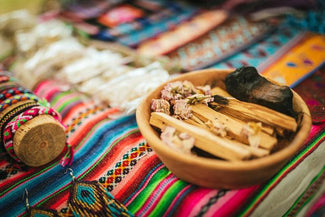
Within Andean ceremonial practice, a Mesa is more than a collection of objects.
It can become a personal ceremonial bundle containing stones, textiles and other sacred items that develop meaning through relationship and continued use.
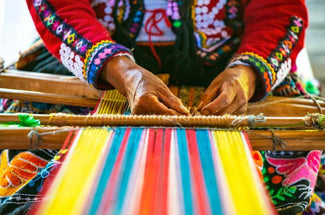
Chumpi Stones may form part of that wider practice, alongside Khuya Stones, Mestana and Unkuna textiles, offerings and other ritual tools.
Their significance is therefore connected not simply with the mineral itself, but with practitioner, teaching, landscape and ceremony.
This is one reason Sacred Essence presents Chumpi Stones as culturally specific ceremonial tools rather than simply another form of healing crystal.
Symbols, Carving & Individual Character
Some Chumpi Stones are carved with points, lines, figures or other symbolic details.
The meaning of these markings can depend upon the particular set, maker and teaching associated with it.
You may encounter references to mountains, animals, plants, celestial imagery or other elements of Andean cosmology, but these should not be treated as a universal dictionary of fixed meanings.
Hand-carving also means that differences in shape, dimensions, markings and finish are part of the character of each piece.
Chumpi Stones & Contemporary Energy Practice
Contemporary teachers and practitioners sometimes use Chumpi Stones around chakra work, energetic symbolism, meditation or body-centred ceremonial practice.
These interpretations may sit alongside Q’ero-derived teachings, modern shamanic schools or personal spiritual practice.
It is useful to distinguish those contemporary frameworks from the living traditions of Q’ero communities themselves.
References to energy centres, clearing or balancing describe spiritual and symbolic practice rather than medically established effects.
Despacho, Reciprocity & Ayni
Chumpi Stones may also appear within the wider ceremonial world of Despacho practice.
A Despacho is an Andean offering practice centred around reciprocity, gratitude and relationship. Ayni — often understood as reciprocal or balanced exchange — is an important principle within that worldview.
Stones, woven textiles and other ritual objects may form part of the ceremonial setting around such work, although the structure and meaning of a Despacho varies according to practitioner and tradition.
The stone is therefore part of a much wider relationship between person, offering, land and sacred landscape.
What Are Boji Stones?
Boji Stones are naturally occurring mineral concretions, generally recognised by their dark, textured surfaces and distinctive geological character.
They are not part of Q’ero or Andean ceremonial tradition.
Within contemporary metaphysical practice, Boji Stones are often explored around themes of grounding, balance and polarity. They may be sold individually or in pairs, and some modern systems describe contrasting stones using masculine and feminine terminology.
Those descriptions belong to contemporary metaphysical traditions rather than scientifically established properties of the stones.
For many collectors, Boji Stones are equally fascinating simply as unusual natural mineral formations.
Boji Stones & Symbolic Polarity
One of the best-known modern associations with Boji Stones is polarity.
Paired stones are sometimes used symbolically to explore opposing or complementary qualities — active and receptive, outward and inward, or balancing two sides of a personal practice.
Some practitioners hold one stone in each hand during meditation or reflective work.
The value of the practice lies in the symbolism and attention brought to it rather than a demonstrated ability of the stones to alter meridians, chakras or biological energy fields.
Chumpi Stones vs Boji Stones
Although they appear together in this Sacred Essence collection, Chumpi and Boji Stones come from very different contexts.
Chumpi Stones are culturally specific carved ceremonial tools associated with Andean practice.
Boji Stones are naturally occurring mineral concretions that have developed a strong following within modern crystal and metaphysical traditions.
One should not be used to explain the other.
Their shared place within this department reflects their use as meaningful stones within spiritual practice, not a claim that they come from the same lineage.
What Are Moqui Marbles?
Moqui Marbles are naturally occurring iron-rich sandstone concretions associated with parts of the American Southwest.
They are geological formations rather than carved Andean ritual tools.
Modern metaphysical traditions sometimes associate them with grounding, balance or paired-stone practices, but these contemporary uses should not automatically be attributed to Indigenous peoples or treated as universal traditional teachings.
Their unusual formation, texture and natural history are interesting in their own right.
Meteorite & Celestial Stones
Selected meteorite pieces may also appear among ceremonial or shamanic-style stones.
Meteorites differ fundamentally from Chumpi, Boji and Moqui stones because they originate beyond the Earth before arriving naturally at its surface.
That celestial origin has led many contemporary spiritual traditions to associate meteorites symbolically with perspective, transformation, the heavens or connection between earth and sky.
These are symbolic interpretations rather than measurable energetic properties.
Where Sacred Essence offers a meteorite piece, the individual listing should identify its material and supplied provenance as clearly as possible.
Earth & Sky in Ceremony
There is a beautiful contrast between a carved stone connected with mountain landscape and a meteorite whose journey began beyond the Earth.
Within personal ritual, some practitioners use that contrast symbolically — earth beneath, sky above, and the individual standing between them.
This can be a meaningful framework for meditation or ceremony without requiring the stones themselves to be described as producing a particular supernatural effect.
The story is already present in the material.
How People Work with Chumpi Stones
How a Chumpi Stone is used depends heavily on teaching and context.
Some practitioners may:
- place stones within a Mesa
- incorporate them into Despacho or offering practice
- hold them during prayer or meditation
- use them within contemporary chakra or body-centred ceremonial work
- keep them as personally significant sacred objects
More formal or initiatory practices are best learned through an appropriate teacher rather than reconstructed from a short product description.
Working with Boji Stones
Boji Stones can be approached much more simply.
Some people hold one during meditation because they enjoy its texture and weight.
Others use paired stones as symbols of balance or polarity.
They may also be kept on an altar, among a mineral collection or alongside other objects connected with a personal intention.
There is no requirement to use them according to one fixed metaphysical system.
Choosing a Ceremonial Stone
Begin with context rather than simply choosing the stone with the strongest claimed “properties”.
If you are interested in Q’ero or Andean ceremonial practice, Chumpi Stones and other clearly provenanced Andean ritual tools provide the most relevant starting point.
If you are drawn towards mineral collecting or contemporary metaphysical symbolism, Boji Stones may have more appeal.
Moqui Marbles and meteorites offer yet another direction, with their own geological stories and modern symbolic associations.
Material, provenance and personal connection are more useful guides than dramatic claims about what a stone will supposedly do.
Authenticity, Provenance & Respectful Sourcing
Provenance matters particularly with culturally specific ceremonial objects.
Sacred Essence works to describe Chumpi Stones and Andean ritual tools according to the sourcing information supplied with each piece.
Where an item is Q’ero-made, associated with a particular practitioner or sourced through a particular artisan relationship, that information should be stated specifically on the product page.
Boji Stones, Moqui Marbles and meteorites should likewise be described according to their own material and origin rather than folded into Andean terminology.
Respecting these distinctions helps preserve the story behind each object.
Explore Q’ero & Andean Collections
If you are drawn particularly to the Andean side of this collection, you may also wish to explore:
These collections help place Chumpi Stones within the wider ceremonial world around Mesa practice, textiles, offerings and Andean craftsmanship.
Explore Other Crystal Departments
You may also wish to explore the wider Sacred Essence Crystal Shop:
You can also explore the full Crystals collection.
Frequently Asked Questions
What are Chumpi Stones?
Chumpi Stones are carved ceremonial stones associated with Q’ero and wider Andean spiritual practice. Their use and symbolism vary according to practitioner, teaching and individual set.
Are Chumpi Stones the same as Khuya Stones?
The terms can appear alongside one another in Andean ceremonial contexts, but they should not automatically be treated as interchangeable. Individual product descriptions should explain how a particular stone is identified and used.
Are Chumpi Stones chakra stones?
Some contemporary teachers use them in relation to chakra or body-centred energy systems. That is one interpretive framework and should not be treated as the only or universal meaning of Chumpi Stones.
What are Boji Stones?
Boji Stones are naturally occurring mineral concretions commonly explored within contemporary metaphysical practice around themes such as grounding, balance and polarity.
Are Boji Stones Andean?
No. Boji Stones do not belong to the same cultural tradition as Q’ero Chumpi Stones.
What are Moqui Marbles?
Moqui Marbles are naturally occurring iron-rich sandstone concretions associated with parts of the American Southwest.
Are Moqui Marbles part of Q’ero tradition?
No. They have a different geological and cultural context and should not be presented as Andean ritual tools.
Can Chumpi Stones be used in a Mesa?
Yes, Chumpi Stones may form part of contemporary Q’ero and Andean Mesa practice, depending on the practitioner and teaching.
Can these stones be used for meditation?
Yes. Any of these stones may be held or placed within a personal meditation or reflective practice if that feels meaningful to you.
Do these stones have scientifically proven healing properties?
No. Their healing, energetic and spiritual associations belong to traditional, contemporary and personal belief systems rather than established medical science.
Related Guides & Reading
Useful supporting guides include:
Visit Sacred Essence in the Lake District
Selected Chumpi Stones, Boji Stones and other ceremonial pieces can also be explored in person at Sacred Essence in Coniston.
These are particularly tactile objects, and seeing a stone in person makes it easier to appreciate its weight, carving, texture and individual character.
If you are travelling to see a particular Chumpi set, Boji Stone pair or other ceremonial piece, please contact us beforehand so we can confirm availability.
Visit Sacred Essence in Coniston
Please Note
Chumpi Stones belong within living Andean and Q’ero ceremonial contexts, while Boji Stones, Moqui Marbles and meteorites have different geological and spiritual histories.
Sacred Essence encourages respectful engagement with culturally specific ritual tools and clear distinctions between traditional practice and contemporary metaphysical interpretation.
References to healing, energy, grounding, protection, chakras or spiritual transformation describe traditional, symbolic or contemporary practices rather than scientifically established medical or psychological effects.