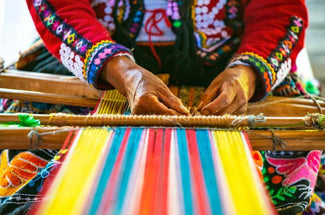
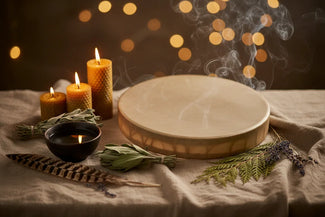
Our curated textile collection brings together sacred and ritual weavings from Q’ero Paqo shamans of Peru, alongside selected Tibetan altar cloths and Sacred Essence exclusives.
Many of these textiles are created within living spiritual traditions, carrying ancestral symbolism, cultural lineage and ceremonial meaning through their colours, patterns and craftsmanship. Q’ero pieces are closely connected with Andean shamanic practice and may be used for mesa building, despacho offerings, altar work, prayer and personal ritual.
The collection is rooted primarily in South American shamanic traditions, particularly the Q’ero lineage of the Andes, while also including a small number of complementary sacred textiles from other traditions.
Explore Sacred Peruvian Textiles & Q’ero Weavings
Sacred textile weavings include ceremonial cloths, mesa textiles, inner cloths, ponchos, pouches and ritual accessories created within living Andean traditions.
The majority of this collection comes from Q’ero communities of Peru, where weaving carries family identity, cultural memory and spiritual meaning through colour, pattern and craftsmanship. These textiles are associated with principles such as Ayni — reciprocity and balanced relationship — and with respect for Pachamama, the natural world and ancestral lineage.
Alongside Q’ero and Peruvian textiles, the collection also includes selected Tibetan altar cloths and Sacred Essence pieces chosen for ritual, meditation and sacred-space use.
How Sacred Textiles Work Together in Ceremony
Different textiles serve distinct roles within a ceremonial system.
A Mestana mesa cloth forms the outer working cloth and wrapping of the mesa, representing the visible or external ceremonial world.
An Unkuna or inner cloth sits within the mesa and holds more personal sacred items, medicine bundles, intentions and prayers.
A Watana or mesa tie secures these layers together, physically and symbolically joining the inner and outer aspects of the bundle.
Larger Manta cloths create the altar or ceremonial foundation itself, providing space for sacred objects, offerings, group work or meditation.
Ponchos, belts, bands, pouches and other woven pieces may support personal ceremonial practice, carrying symbolic colours, patterns and traditional meaning.
The majority of the collection is sourced from Q’ero and other Peruvian artisan communities, with particular emphasis on textiles associated with Q’ero Paqos and Andean ceremonial traditions.
The range also includes selected textiles from other traditions, including Tibetan altar cloths.
Sacred Essence works with makers, families and artisan contacts to support traditional craftsmanship and help sustain living weaving traditions.
How Are Sacred Textiles Used?
Depending on the individual textile, uses may include:
Wrapping and protecting mesa or medicine bundles
Creating altar foundations and ceremonial spaces
Holding sacred stones, feathers, herbs and ritual objects
Supporting despacho offerings, prayer and ceremony
Defining meditation and personal ritual spaces
Carrying sacred or personal items
Wearing traditional ceremonial garments and accessories
What Materials Are Used?
Materials vary between individual pieces and may include sheep or alpaca wool, cotton and hand-spun fibres.
Traditional textiles may use natural or locally produced dyes, while materials and dyeing methods can vary between makers and regions. Check individual product descriptions for specific details.
Frequently Asked Questions
What are Q’ero sacred textiles?
Q’ero sacred textiles are woven ceremonial pieces associated with Q’ero communities of the Peruvian Andes. They can include mesa cloths, inner Unkuna cloths, Manta altar cloths, ponchos, pouches, belts and other woven ritual items.
What is the difference between a Mestana, Unkuna and Manta?
A Mestana is the outer working cloth of a mesa. An Unkuna is a smaller inner cloth used to hold personal sacred items. A Manta is a larger ceremonial textile used as an altar foundation, centre-piece cloth or meditation space.
Are all textiles in this department Peruvian?
No. The collection is primarily Peruvian and Q’ero, but also includes a small number of sacred textiles from other traditions.
Are these textiles handmade?
Many pieces are handwoven or handmade using traditional methods. Check individual product listings for the specific maker, materials and construction of each item.
Can these textiles be used for meditation or altar work?
Yes. Depending on the textile, they may be used for altar creation, meditation, prayer, mesa work, ceremonial bundles or sacred-space practice.
Explore Related Brands & Artisan Collections
Sacred Essence – Explore our own collection of pieces for ritual and personal practice.
Incense – Discover incense for ritual, meditation and sacred-space use.
Related Guides & Blog Articles
Guide: Shamanism – A broader introduction to shamanic traditions and contemporary practice, while recognising the distinct cultural context of Q’ero textiles.
Guide: How to Create an Altar – Practical ideas for arranging a personal sacred space with cloths and meaningful objects.
For a closer look at how ceremonial cloths work together, read our blog article, Q’ero Shaman Altar Guide: Andean Mesa & Ritual Tools. It explores outer and inner cloths, mesa ties and the relationship between a wrapped ceremonial bundle and an altar.
Visit Sacred Essence in Coniston
Selected sacred textiles and ceremonial pieces can also be explored in person at our Sacred Essence shop in Coniston, in the Lake District.
If you are looking for a particular Mestana, Unkuna, Manta or Q’ero textile, please check availability before travelling.
These textiles are offered for spiritual, ceremonial and cultural use. Sacred Essence encourages respectful engagement with the traditions and communities from which they originate.
Join our community
Sign up for 10% discount off your first order, exclusions apply.*